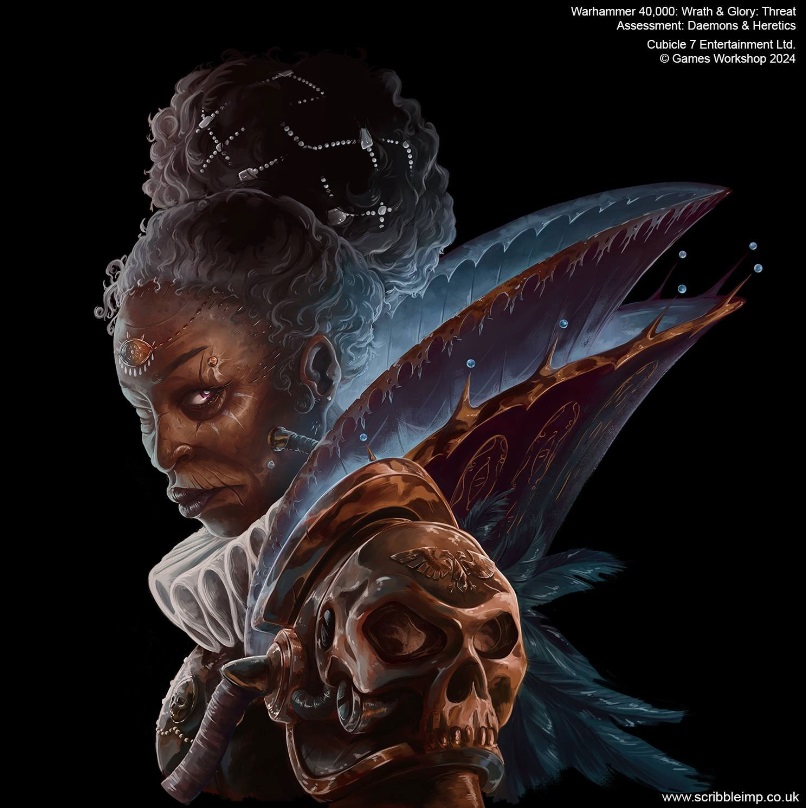
Chaos Cultist Noble Art
Cultist Nobles: The Corrupt Elite of Chaos Worship
Origins and Background
Cultist Nobles in Warhammer 40,000 often originate from the upper echelons of Imperial society, hailing from wealthy and influential families. These individuals use their noble heritage to access privileges, resources, and networks, which are later exploited in service to Chaos. Their descent into heresy may begin innocently enough—dabbling in forbidden lore or secret gatherings—but soon spirals into full devotion to the Ruinous Powers. Some are drawn by promises of eternal youth, beauty, or knowledge, while others are lured by sheer ambition and the chance to wield power beyond mortal understanding.
The corruption of a Cultist Noble typically unfolds over time. Early involvement in cult activity often takes the form of quiet support, such as funding underground movements or hosting private rituals. However, as their allegiance deepens, they grow bolder, leading public displays of heretical worship or outright rebellion. Their rise within Chaos cults reflects not only their personal transformation but also the allure Chaos holds for those dissatisfied with the rigid structure of the Imperium.
Role and Influence
A Cultist Noble’s societal standing makes them far more dangerous than the average Chaos worshiper. As charismatic leaders, they spearhead cult activities, recruiting new followers and rallying their forces with impassioned speeches. Their wealth enables them to arm and supply their cultists, while their connections allow them to infiltrate key institutions. Cultist Nobles often prey on the disenfranchised, promising liberation or purpose to those disillusioned with the harshness of Imperial life.
Their political maneuvering is another tool in their arsenal. With access to influential circles, Cultist Nobles can manipulate other nobles, blackmail officials, and even bribe enforcers of Imperial law. This ability to navigate the complexities of planetary governance often ensures t