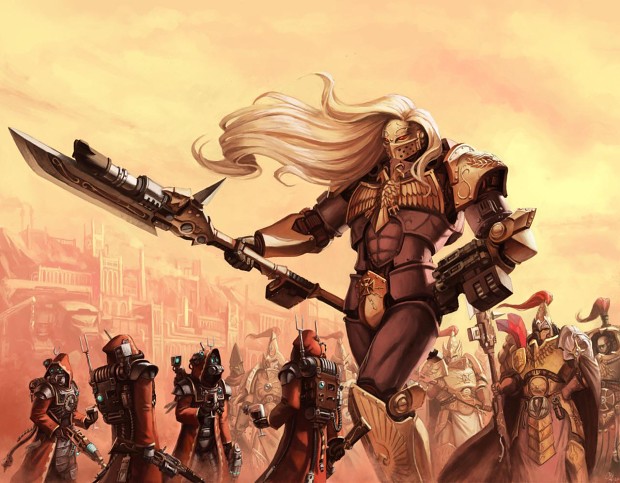
The Knights of Santodes Artwork
Santodes: A Knight World of Honor and Tradition in Warhammer 40,000
The Knight World of Santodes
Santodes, a renowned Knight World within the Segmentum Solar, is a planet steeped in ancient traditions and noble duty. Its vast plains and towering mountain ranges serve as both the battlegrounds and the heartlands of its proud Knightly Orders. The ruling houses of Santodes reside in massive, fortress-like castles that dominate the landscape, serving as both homes and armories. These fortresses are centers of training and maintenance, where young scions of noble families are prepared to pilot the mighty Imperial Knights. The planet’s dedication to its martial legacy is evident in every facet of its culture, ensuring that its Knights are always ready to serve the Imperium.
The Knights of Santodes
The Imperial Knights of Santodes are legendary for their martial prowess and unyielding loyalty to the Emperor. Each towering war machine is a symbol of the planet’s honor, bearing the intricate heraldry and ornate armor of its respective house. Piloted by nobles sworn to ancient oaths, these Knights stride into battle with a sense of duty and purpose that few can match. Their fearsome presence on the battlefield has turned the tide in countless wars, making them indispensable to the Imperium’s war efforts. To the Knights of Santodes, every victory is a testament to their enduring commitment to the protection of humanity.
Traditions and Legacy
Santodes is a world rich in tradition, where the legacy of its Knightly Orders is meticulously preserved and celebrated. Every aspect of a Knight’s life, from their training to their deployment, is steeped in rituals that honor their ancestors and the Machine God. The planet’s ruling houses maintain an unbroken line of service, passing down the knowledge of piloting and maintaining Imperial Knights through the generations. These traditions ensure that the values of loyalty, honor, and duty remain at the core of Santodes’ identity. For the