Perturabo Amazing Artwork
Perturabo: The Iron Primarch’s Art and Lore in Warhammer 40,000
Overview of the Artwork
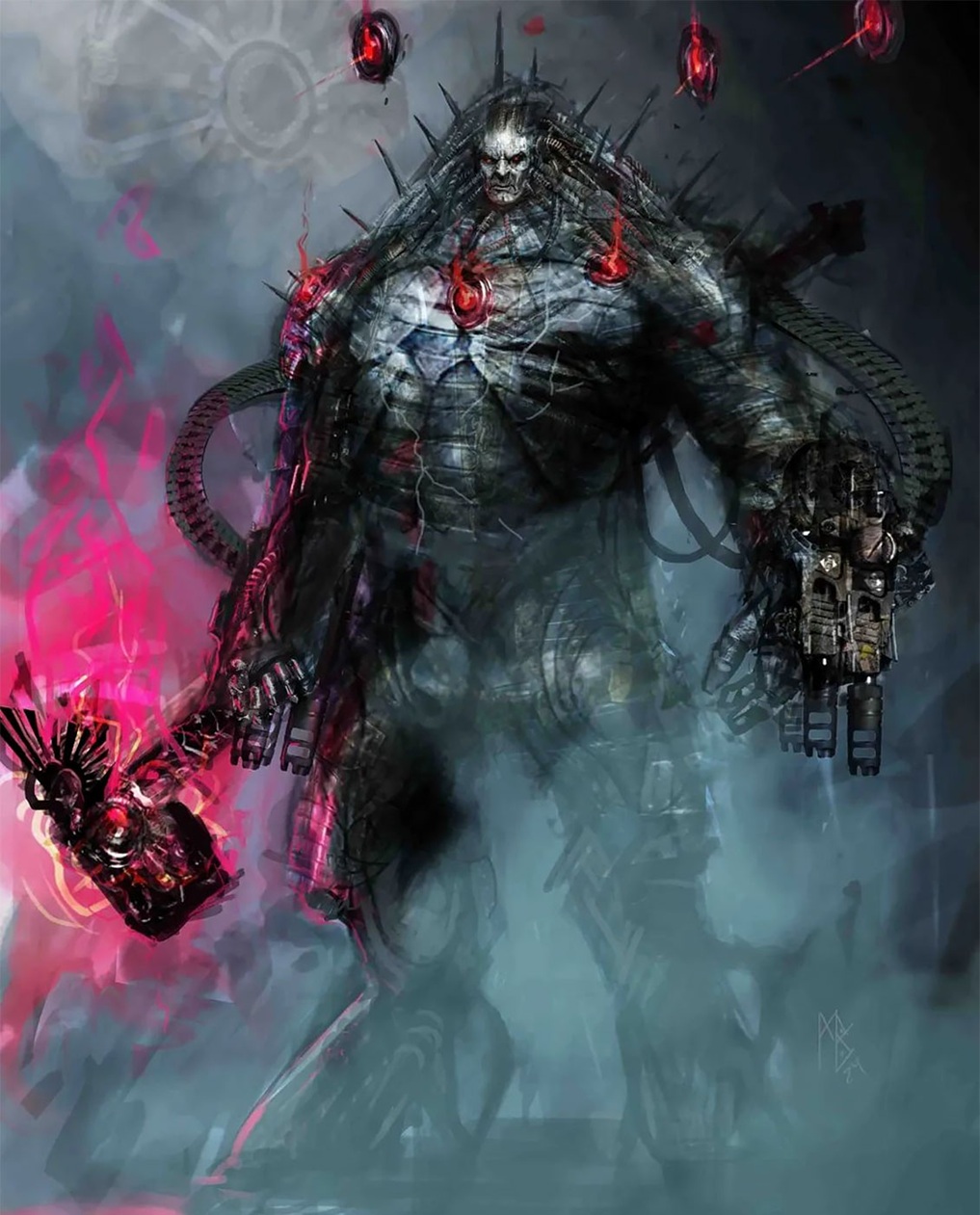
This artwork of Perturabo, the Primarch of the Iron Warriors in Warhammer 40,000, is a haunting blend of mechanical and organic elements. He looms as a massive, hulking figure, his body a fusion of cold steel and warped flesh, radiating an aura of unyielding power. His armor is a dark, industrial gray, covered in intricate gears and glowing red runes that pulse with energy. In one hand, he wields a massive hammer, Forgebreaker, its head crackling with fiery light, while his other arm is a mass of cybernetic tendrils. Floating servo-skulls with glowing red eyes hover around him, adding a sinister, calculating vibe. The background is a smoky mix of teal and crimson, reflecting his bitter, destructive nature.
Details of Perturabo’s Appearance
Perturabo’s design is a testament to his role as a master of siege warfare and machinery, with every detail screaming cold efficiency. His armor is adorned with pistons, cables, and spiked protrusions, giving him the look of a walking fortress. His face, partially visible, is gaunt and pale, with a stern expression that speaks of resentment and determination. Spikes jut from his head and shoulders, a nod to his Iron Warriors’ brutal aesthetic, while his chest glows with embedded warp-infused tech. The servo-skulls circling him are mechanical yet eerie, their red eyes casting beams of light that cut through the haze. The artist has captured Perturabo’s essence as a being of logic twisted by betrayal and rage.
The Lore of Perturabo – The Iron Primarch
Perturabo, the Primarch of the Iron Warriors Legion, is a tragic and complex figure in Warhammer 40,000 lore, known for his genius in siegecraft and engineering. Raised on the planet Olympia, he grew up isolated, his natural talents for building and strategy overshadowed by a deep sense of being unappreciated. Recruited by the Emperor to join the Great Crusade, Perturabo’s legion was often tas