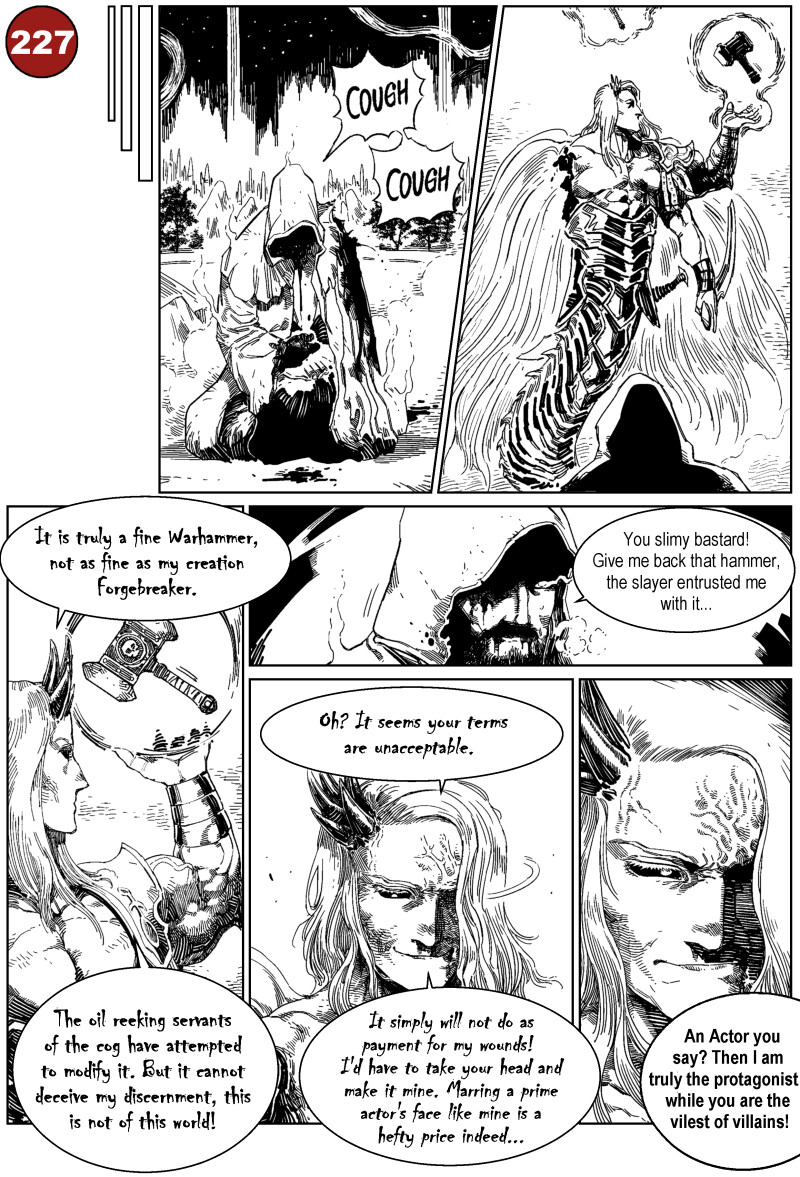
If Doom Slayer joins the Imperium of Man Page 227
Fulgrim’s Theatrical Triumph: Vanity and Cruelty in the Emperor’s Children
Fulgrim Takes the Stage
This comic page from If Doom Slayer joins the Imperium of Man presents Fulgrim, the Primarch of the Emperor’s Children, in a scene that radiates theatrical arrogance and daemonic grace. Cloaked in serpentine armor and with sweeping, elegant hair, the horned Fulgrim levitates above a cloaked, coughing figure—a defeated warrior groveling in the dirt. Fulgrim holds a glowing warhammer aloft with psychic ease, inspecting it with a critic’s disdain rather than a warrior’s focus. The background flares with stark contrast, heightening the drama of the confrontation. His opening remarks dismiss the weapon as inferior to his own masterpiece, Forgebreaker, delivered with casual pride. Fulgrim’s posture, tone, and dialogue all scream that he is not just a villain, but a performer basking in the spotlight of his own cruelty.
Words Drenched in Vanity
As the man below demands the hammer’s return, Fulgrim spirals into a soliloquy of contempt and aesthetic judgment. He denounces the oil-slicked servants of the Machine God who tried to disguise the hammer’s origins, claiming they cannot fool his refined senses. To Fulgrim, everything is about purity of form and beauty, and this tool—despite its worth to the man pleading below—is just another flawed imitation. With a smirk and condescending elegance, he rejects the man’s desperate bargain. His idea of payment is twisted: not mercy, but violence dressed as drama. Fulgrim’s wounded vanity takes center stage as he suggests only the man’s head can make up for the damage done to his perfect visage.
The Protagonist of His Own Opera
In a moment that blends self-delusion with artistic flair, Fulgrim declares himself the protagonist and labels his victim the “vilest of villains.” This inversion of morality is delivered with such conviction that it borders on performance art, perfectly in line with Fulgrim’s warped perception of reality. Th