If Doom Slayer joins the Imperium of Man Page 197
The Bitter Cost of Triumph: Intrigue and Accusation in the Imperium
The Aftermath of Victory
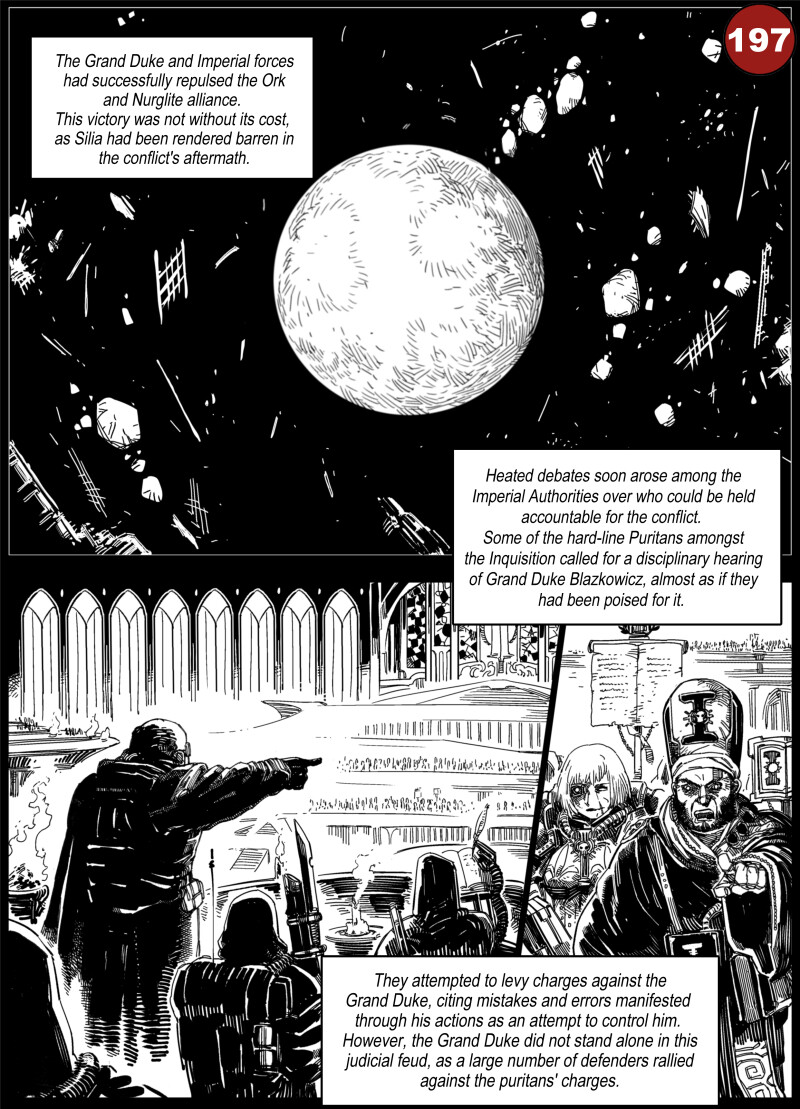
This page from "If Doom Slayer joins the Imperium of Man" opens with a somber shot of a barren moon or planet, scarred by war and surrounded by scattered debris in orbit. A block of narration sets the tone, explaining that while the Grand Duke and Imperial forces successfully defeated an alliance of Orks and Nurgle cultists, the victory came at a devastating cost—rendering the planet Silia lifeless. The celestial backdrop creates a grim, silent sense of aftermath and futility, reinforcing that in the Imperium, even victory can feel like loss. This frame quietly evokes the cold scale of Warhammer 40k’s setting, where planets are treated as resources and victory often leaves nothing behind but ash. Despite the grandeur of space, the emptiness reflects the moral and physical toll of the conflict. The composition reminds the reader that in the Imperium, survival does not guarantee redemption.
Political Turmoil in the High Halls
The second panel moves from the stars to the vaulted halls of Imperial power, showing the brewing storm of bureaucracy and blame. Tall arched windows dominate the background, hinting at the scale and ceremony of Imperial governance, while a group of silhouetted officials debates fiercely. A commanding figure points accusingly, his cloak billowing, as other robed figures join in a heated exchange. The narration reveals that tensions erupted among the Imperium’s upper echelons, particularly among hardline Puritan inquisitors who sought to place blame on Grand Duke Blazkowicz. The way the scene is drawn makes it feel both theatrical and oppressive, capturing the baroque and judgmental culture of the Imperium. It becomes clear this wasn’t just about a military failure—this was a political ambush, long in the making.
Inquisition Versus Loyalty
The final panel zeroes in on the central players of this power struggle, highlighting the