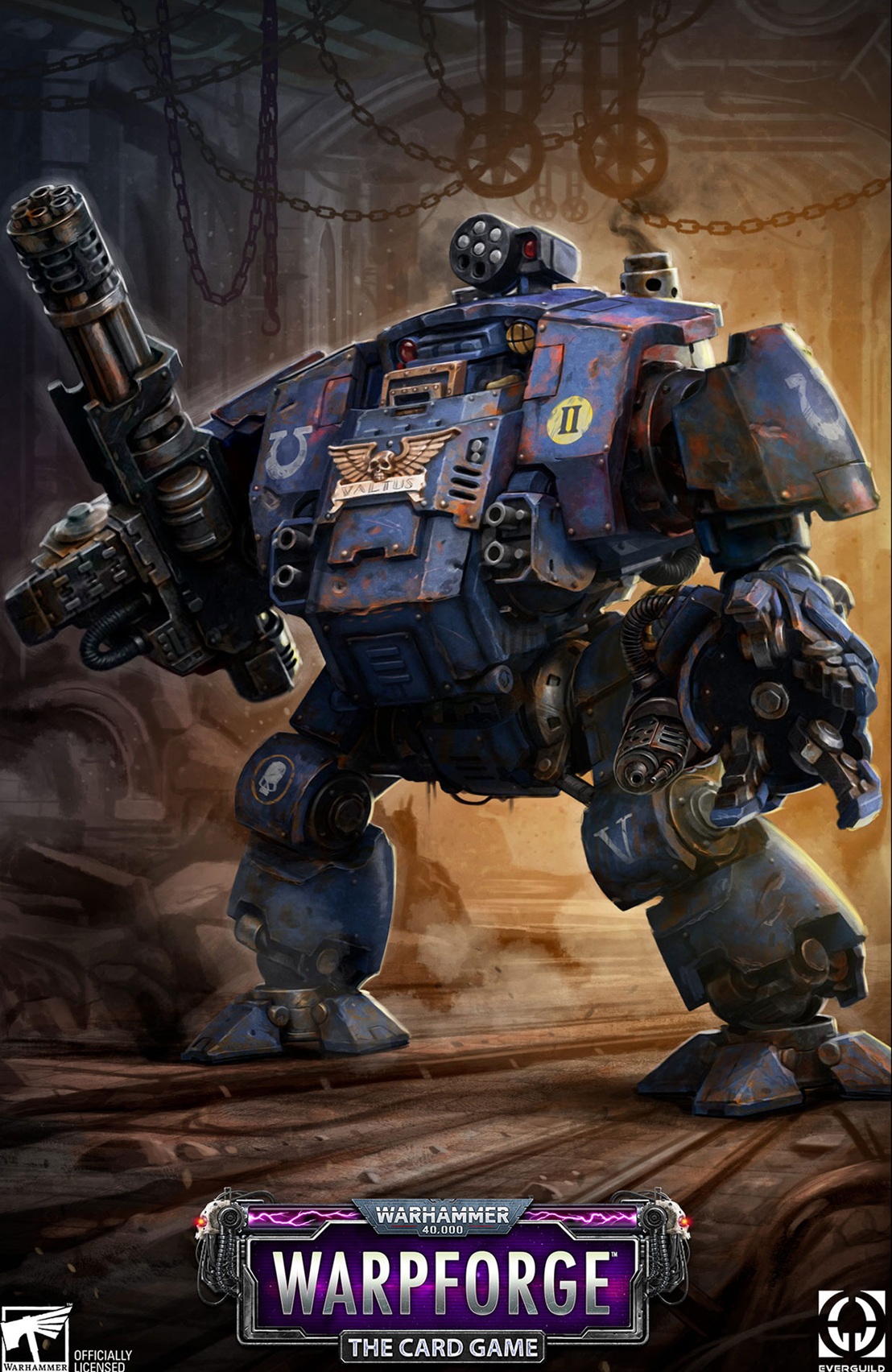
Redemptor Dreadnought Warhammer Art
Valtius: The Ultramarines' Redemptor Dreadnought
Towering Guardian of the Ultramarines
This striking image features a Redemptor Dreadnought of the Ultramarines Chapter, rendered in bold, weathered blue with gold trim and markings of the 2nd Company. Its armored chassis is scuffed and battle-worn, reflecting countless engagements in the Emperor's name. The Dreadnought bears a nameplate that reads "Valtius," honoring the fallen hero interred within. In its right arm, it wields a powerful heavy onslaught gatling cannon, a brutal weapon capable of shredding infantry and light armor with terrifying speed. The left arm ends in a massive power fist equipped with a built-in flamer, perfect for close combat annihilation. Behind it, chains and gears suggest a forge or cathedral-like interior, reinforcing its sacred role as a machine of both war and reverence.
Origins and Evolution of the Redemptor
The Redemptor Dreadnought is a relatively new addition to the Adeptus Astartes arsenal, developed in tandem with the Primaris Space Marines. Created during the Indomitus Crusade under the direction of Belisarius Cawl, it offers a more mobile and heavily armed alternative to older dreadnought models like the venerable Contemptor or standard Castraferrum. These war engines house critically wounded Primaris Marines whose minds and bodies are too damaged to continue fighting in their original form. Once installed in a sarcophagus at the Dreadnought's core, the warrior continues to serve with undying loyalty. This process is seen as both a blessing and a burden, for the warrior is granted new life but imprisoned within a steel shell. Still, their resolve never falters as they rain death upon the enemies of mankind.
Sacred Machine of War
Each Redemptor Dreadnought is more than just a vehicle—it is a revered relic of its Chapter. The interred warrior is often a celebrated hero, their name and deeds etched into plaques or painted across their sarcophagus. These machines march in