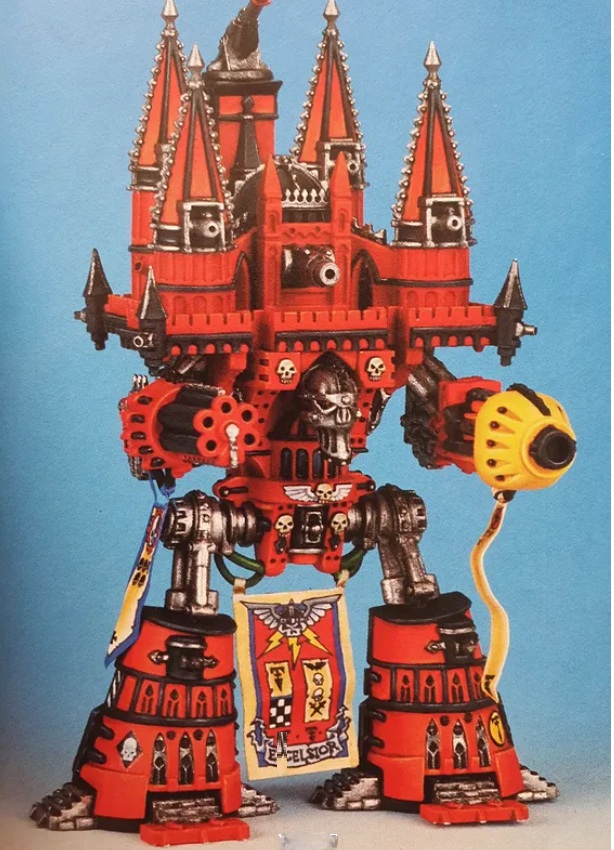
Imperator-class Titan Miniature Oldhammer
Imperator Titan: The Cathedral of War
A Cathedral of War
The image you've shared is a classic Oldhammer-era model of an Imperator-class Titan, one of the most awe-inspiring war machines in the Warhammer 40,000 universe. Towering over the battlefield, this particular miniature embodies the gothic, baroque excess that defines the Imperium of Man. Its most striking feature is the enormous cathedral-like structure mounted on its back, complete with soaring spires, arched windows, and grim statues. This is not just for show—Imperator Titans often carry functioning chapels and command sanctuaries, making them mobile fortresses of both war and worship. Painted in vibrant red with black and gold details, this model screams allegiance to the God-Emperor, a shrine and weapon rolled into one. It’s like someone put a medieval church on legs and gave it the firepower to destroy entire cities.
A Walking Fortress
An Imperator-class Titan isn’t just a big robot—it’s a full-fledged city on the move. Piloted by a Princeps and crewed by hundreds, these Titans are living monuments to the Imperium's martial and religious might. They're defended by void shields, packed with plasma reactors, and bristling with weapons capable of reducing armies to ash. The banners hanging from the legs on this model are more than decoration—they're marks of honor, record-keepers of centuries of service in the Emperor’s name. Note the skull motifs, mechanical tubing, and imposing gun arms—all classic design elements from the golden era of Oldhammer. Even the base of the model is lined with Gothic arches and faces, like a chapel that sprouted feet and decided to wage holy war.
Weaponry of Divine Fire
On its right arm, the Titan bears what looks like a plasma annihilator or perhaps a quake cannon, a weapon that could level buildings with a single blast. The left arm sports a multi-barrel Gatling gun, ideal for wiping out hordes of lesser enemies. These armaments are symbolic as much as th