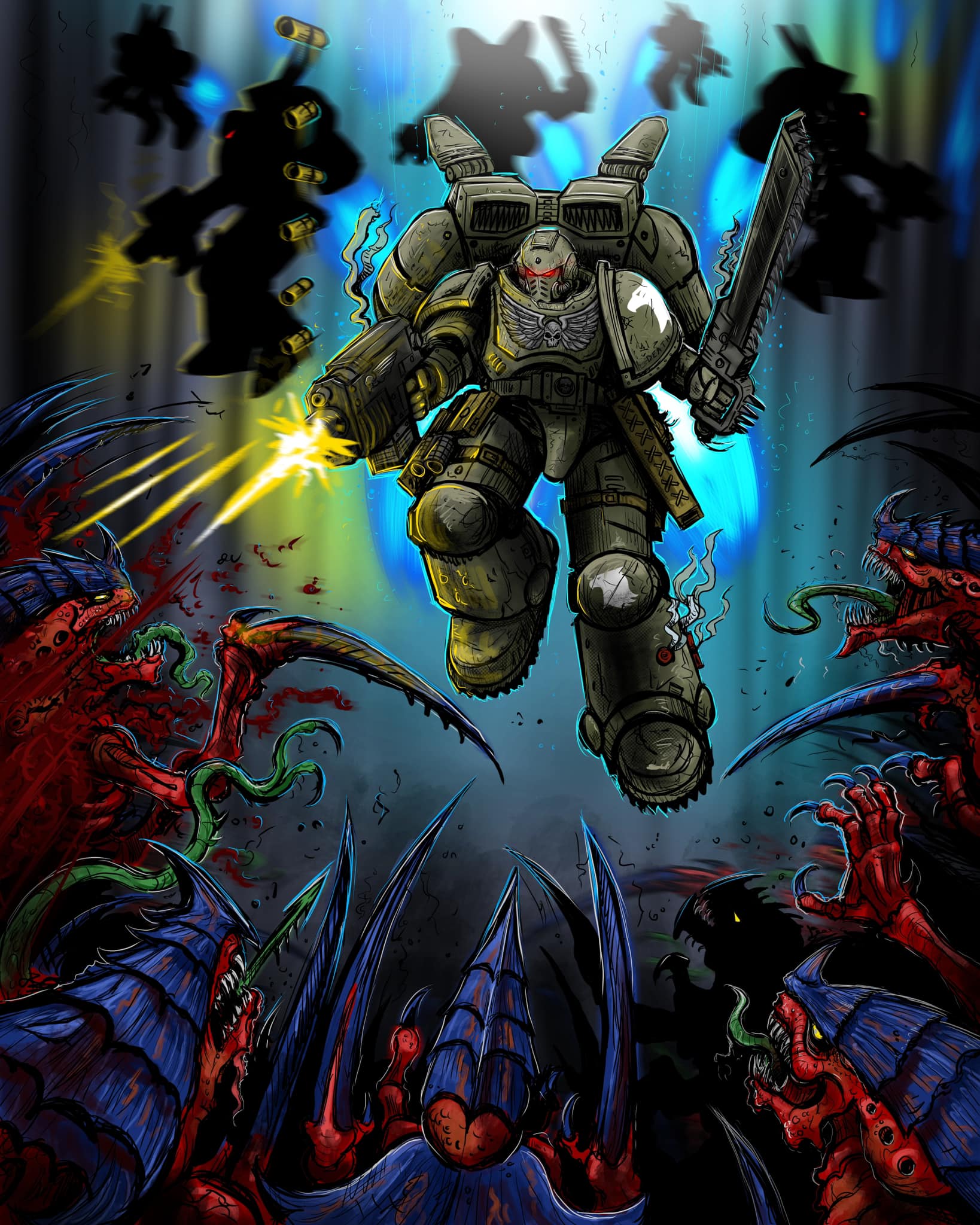
Raptors Space Marines Versus Tyranids
Raptors vs. Tyranids: A Silent Strike in the Dark
A Clash in the Dark Depths
This dramatic artwork thrusts us into the heart of a fierce confrontation between the Raptors Chapter of Space Marines and a swarm of Tyranids. The central figure—a Raptors Assault Marine—descends through a cavernous, dimly lit void, weapons blazing and chainsword raised. All around him, monstrous Tyranids surge upward, their claws slashing, maws shrieking, and carapaces glistening with fresh blood. The lighting creates a haunting contrast between the cool blue energy behind the Marines and the blood-red chaos below. Above, other Raptors drop like silent angels of death, their forms still in shadow but unmistakably poised for battle. It’s a perfectly timed moment of chaos and courage, capturing the split-second when strategy collides with instinct.
Raptors: Ghosts in Green
The Raptors Chapter is a stealth-oriented successor of the Raven Guard, known for their pragmatic, tactical mindset and preference for guerrilla warfare. They favor subtlety and precision over brute force, making them especially deadly in close-quarters environments like the one depicted here. Raptors often modify their armor for silence and efficiency, painting it in dull, camouflaged greens that reflect their approach to war. Though their appearance may lack the flamboyance of other Chapters, their effectiveness is legendary. In the artwork, the lead Marine's calm focus and calculated strike reflect this tactical discipline. For the Raptors, the battlefield is not a place of glory—it’s a place of work.
Tyranids: The Hunger That Devours
Opposing them are the Tyranids, a monstrous alien swarm driven by a singular, terrifying purpose: consumption. These bioengineered horrors descend on worlds like locusts, stripping entire planets of all biomass before moving on. Each creature is grown for a specific role—claws, talons, and fangs tailored to rip through flesh and ceramite alike. In the foreground, we see