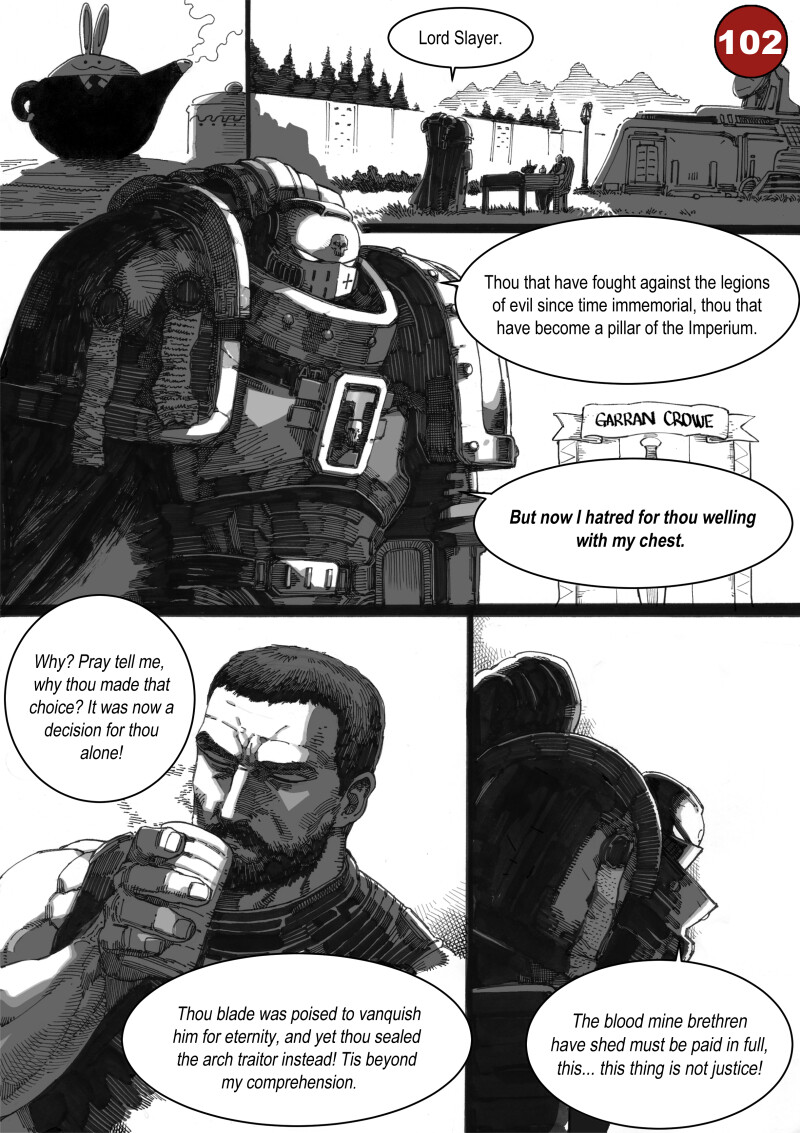
If Doom Slayer joins the Imperium of Man Page 102
The Grim Duty of Doom Slayer: Justice and Sacrifice in the Imperium
If Doom Slayer Joins the Imperium of Man Page 102 Comics.
The Artwork’s Style and Atmosphere
This page from If Doom Slayer Joins the Imperium of Man features a dark, dramatic, and highly detailed art style. The use of black-and-white shading, combined with fine linework and heavy contrast, gives the piece a sense of depth and weight appropriate for the grimdark setting of Warhammer 40,000. The characters are rendered with a sense of realism, particularly in the armor and facial expressions, which convey a strong emotional intensity. The background details, such as the fortress-like structures and the solemn gravestone labeled “Garran Crowe,” add to the somber and reflective tone of the scene. Despite the serious atmosphere, the presence of a small teapot with bunny ears in the first panel adds an unusual and almost humorous contrast, which might suggest a brief moment of levity in an otherwise heavy discussion.
Conflict and Emotional Tension
The dialogue in this scene conveys deep emotions—anger, frustration, and betrayal—between the two main characters. The warrior in massive, gothic-styled power armor is being addressed as "Lord Slayer," indicating his importance, possibly as a revered figure of the Imperium. However, the speaker, a rugged, battle-hardened man, confronts him with raw emotion, questioning a critical choice he made. The language used is archaic and formal, reinforcing the grandeur and solemnity of the Imperium’s warriors. The accusation that the Slayer had the chance to “vanquish him for eternity” but chose to “seal the arch-traitor instead” suggests a momentous decision that spared a great enemy at the cost of justice for fallen comrades. This dialogue is heightened by the expressions—one figure remains silent, clad in cold armor, while the other speaks with visible emotion and anger, clutching his fist in frustration.
Themes of Duty and Justice
At the heart of this scene is the