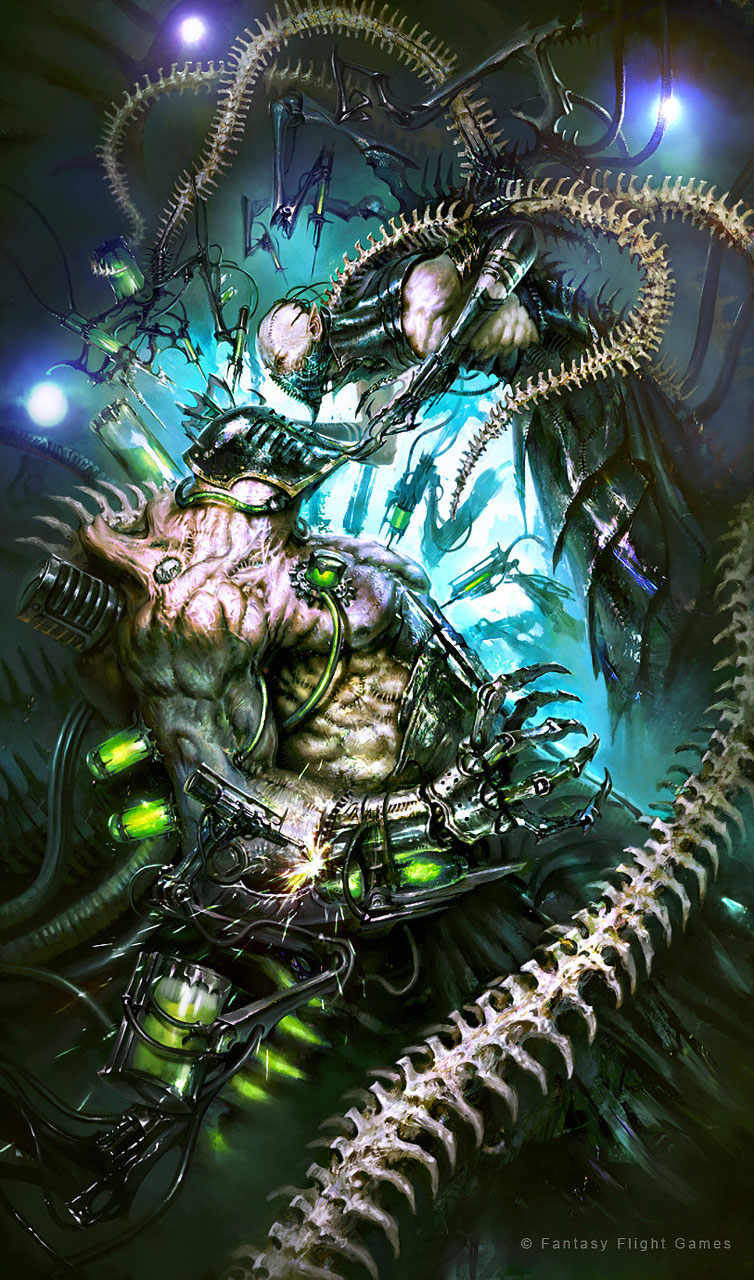
Haemonculi Experimenting on Wrack Drukhari
The Nightmare Laboratory: Haemonculi's Art of Agony
The Nightmare Laboratory
The artwork depicts a horrifying scene within a Haemonculi's dark laboratory, where a grotesque Wrack is undergoing a fresh experiment. The setting is filled with eerie, bio-luminescent lighting, casting an unnatural green glow over the nightmare unfolding. Mechanical limbs, serrated tools, and syringes filled with unknown toxins hang in the air, poised to continue their grisly work. The atmosphere is one of cold, clinical precision mixed with a deep, sadistic artistry—this is not just a laboratory, but a theater of pain where flesh is reshaped into something far worse than death.
The Wrack’s Transformation
At the center of the image, the Wrack is locked in a state of violent mutation, its body riddled with cybernetic enhancements, surgically grafted weapons, and cruelly exposed musculature. Its face is partially masked with dark, biomechanical plating, while its exposed flesh is covered in sutures and tubes pumping unknown fluids into its veins. It is unclear whether the Wrack is experiencing agony or some perverse form of enlightenment, as its body is twisted into something more monstrous than human. The Haemonculi do not merely create soldiers—they sculpt pain itself, turning their subjects into living works of suffering.
The Haemonculus: Architect of Horror
Looming over the Wrack, the Haemonculus works with a detached, almost loving precision, its many mechanical limbs extending like the arms of a cruel artist. Haemonculi are master flesh-crafters, obsessed with perfecting the fusion of organic life and unnatural augmentation. Unlike the warriors of the Drukhari, who revel in the thrill of battle, Haemonculi thrive in their laboratories, finding pleasure in the endless reshaping of flesh and bone. Each Wrack is a testament to their artistry, a subject forced into an eternity of servitude through suffering, their bodies no longer their own.
The Role of Wracks in the